

On Knowing Your Origin
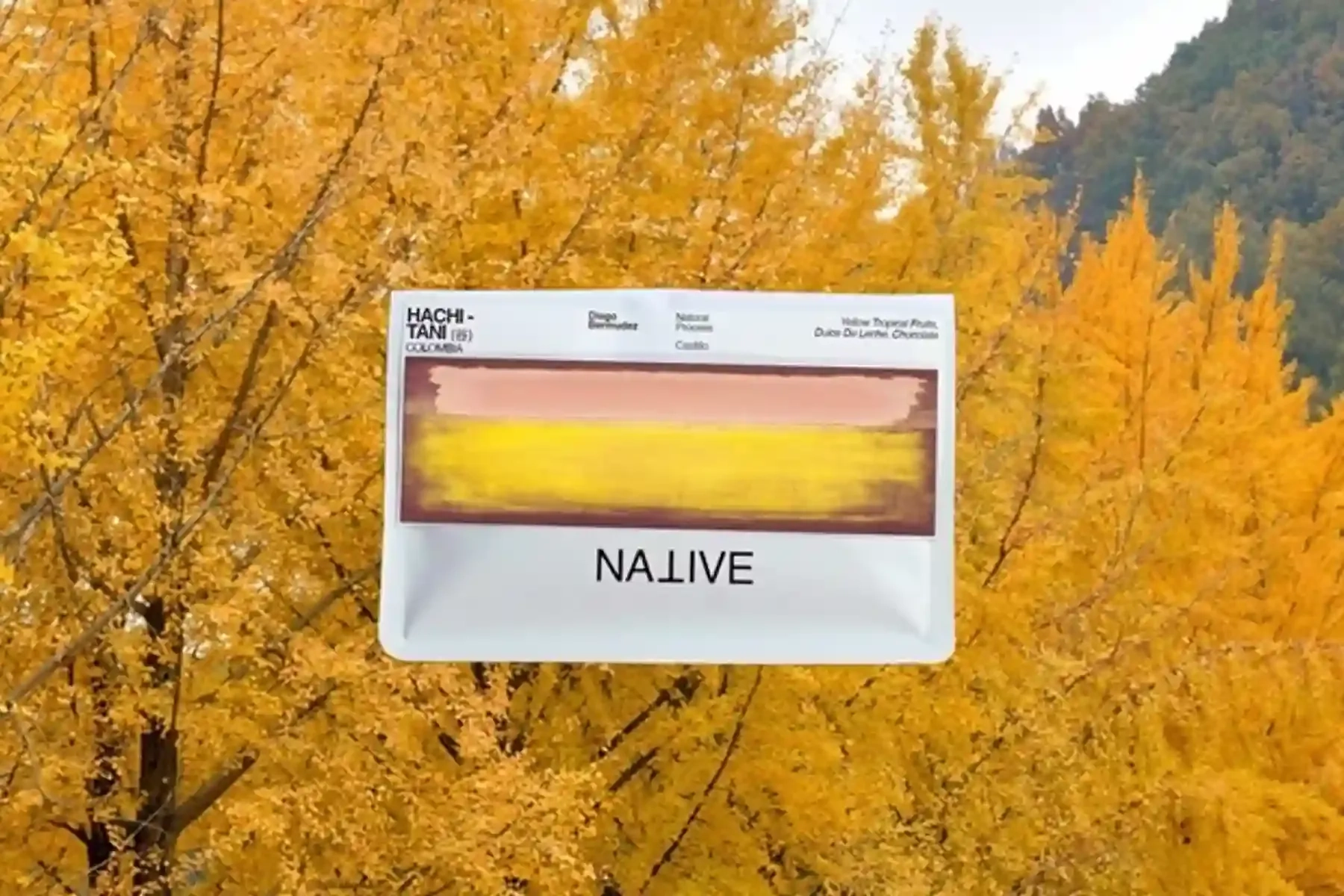
HACHI TANI (谷)
ABOUT THIS COFFEENative Coffee Company, Chiriqui, Panama 🇵🇦 | Popayàn, Colombia 🇨🇴 | Dallas, USA 🇺🇸
Tasting notes: Yellow Tropical Fruits, Dulce De Leche, Chocolate
-
Antioquia, Colombia 🇨🇴
-
Natural
-
Castillo
-
High
A Cup That Knows Its Origin
A tasting note on TANI (谷) — and what Diego Bermudez teaches us about who holds the story.
There's a phrase Native Coffee Co. uses that, at first glance, might sound like a brand slogan. But when you understand what the company is doing and who Diego Bermudez, the man behind the business is, you realize it’s actually something else entirely. It’s not a tagline. It’s a manifesto:
"Challenging the ordinary provokes cultural change."
— Diego Bermudez, co-founder, Native Coffee Company & Hachi Coffee ProjectThe Pillar
What’s in the cupTANI (谷) is a Castillo variety from Diego's El Peñón estate in Guayabillas, Bolívar, Colombia. It's processed naturally, roasted at origin, and distributed through Hachi as part of a BASE-level project: coffee designed for everyday drinking, but delivering uncommon depth.
It opens with the brightness of yellow tropical fruits. A creamy dulce de leche sweetness carries through the middle. The finish is smooth, warm, and comforting, with milk chocolate notes. Balanced. Approachable. And quietly excellent.
The BASE line celebrates clarity, sweetness, and balance. This lot embodies exactly that.
The Press
The Person Behind the ProcessDiego Bermudez is a trained physicist and engineer who also happens to be one of Colombia's most innovative coffee producers. He co-founded Native Coffee Co. and operates a roastery from the sunlit hills of Colombia, within miles of where the coffee itself is grown.
That proximity matters. It's not incidental. Visit their website and you’ll see origin highlighted everywhere. The co-ordinates of their operations in Panama and Colombia are listed prominently on the home page. Their tagline is “Origin roasted coffee project”; their brand promise, “connecting consumers to origin — like never before”.
Because Diego can roast coffee in the same month the cherries are harvested — every 15 days, thanks to Colombia's year-round growing cycles — he has something most producers don't: the ability to analyze a plant and predict how its coffee will taste before it's even picked, measurable through volatile aromatic compounds. From there, he builds a bespoke processing method for each lot. Not a template. A response.
This is what precision in service of care looks like.
It’s rarer than it sounds. When the roaster and the grower are the same person working the same land, the space that usually separates growing from crafting disappears. Diego doesn't have to interpret the coffee from a distance — he already knows it.
The Structural Problem Native Is SolvingThe deeper I have gotten into coffee, the more I have noticed the similarities, and stark differences, to other food industries. For example, coffee and wine are deeply comparable — both grown from the earth, both transformed by fermentation, both traded globally. But there's a critical difference in who gets to be the hero of the story.
In wine, producers are celebrated. In coffee, it's traditionally been the roasters.
Coffee farmers have all too often been completely invisible in the coffee commodity chain, and correcting this has been a big part of the third wave coffee movement in general. But Native has taken it even further. Their entire model is based around closing the gap between the people who grow our coffee and the people who turn it into the product that reaches our table. Farmers in their supply chain earn several times the commodity price, plus bonus percentages from the sale of their coffees. They maintain only transparent, sustainable sourcing relationships. They've made the farmer the narrator.
This isn't charity. It's structural integrity.
The Yield
You can't separate the cup from the conditions. The same is true of community.The coffee industry has a Volatile Nexus — a place where the tradition of how things have always been done collides with the digital, economic, environmental and ethical pressures of how they should be done. Native is living inside that tension, and Diego has turned it into his laboratory.
His approach — rigorous measurement, iterative method, deep relational investment in the source — is precisely what we advocate for when organizations navigate their own volatile crossings.
You can't separate the cup from the conditions that produced it. You can't separate a community from the infrastructure that holds it. And you can't build belonging — at a Communal Table or otherwise — without first honouring the people who grew the thing.
TANI (谷) tastes like clarity because it was built with clarity. That's the yield.
HACHI - TANI (谷) is available in the US through Hachi, from Native Coffee Co. and in Canada from Eight Ounce Coffee Co. — roasted at origin in Colombia Read More: Coffee Club Mix Roaster Highlight: Native Coffee Co (Eight Ounce Coffee Co.) | Diego Bermudez: Colombia's master of coffee fermentation (94 Celsius Coffee) | Project Hachi
Image: Native Coffee Company